Spoolar
Professional field recording for iOS. 32-bit float capture, BWF/iXML metadata, UCS classification.
The Gap
Professional field recording on iOS means choosing between apps designed for musicians (wrong metadata format), apps designed for podcasters (wrong workflow), and apps designed for sound recordists a decade ago (abandoned or feature-frozen). None of them write BWF/iXML metadata at the point of capture. None of them classify recordings using the Universal Category System that the film and game audio industry actually uses.
The result: every recording arrives in the library untagged, unnamed, and requiring manual post-processing before it is usable in production.
The Approach
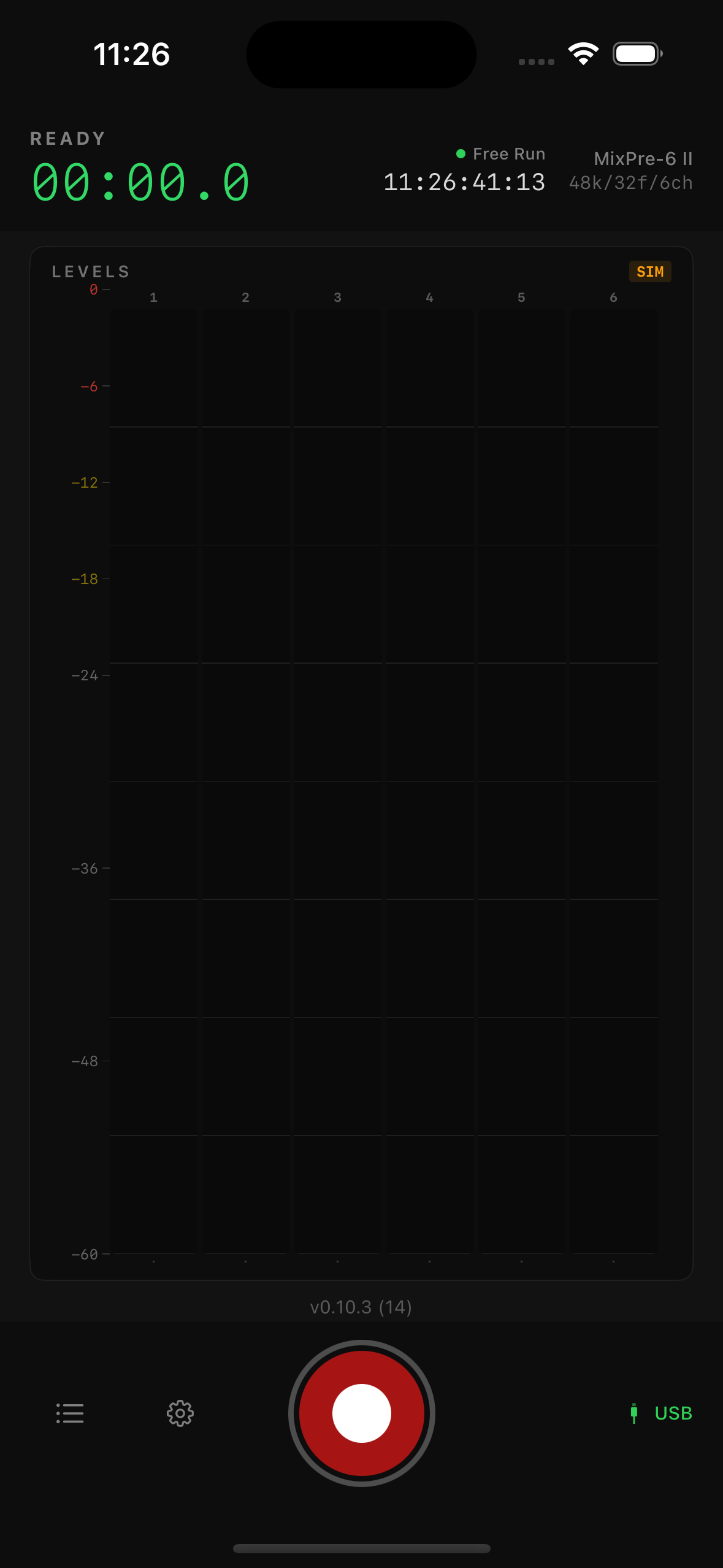
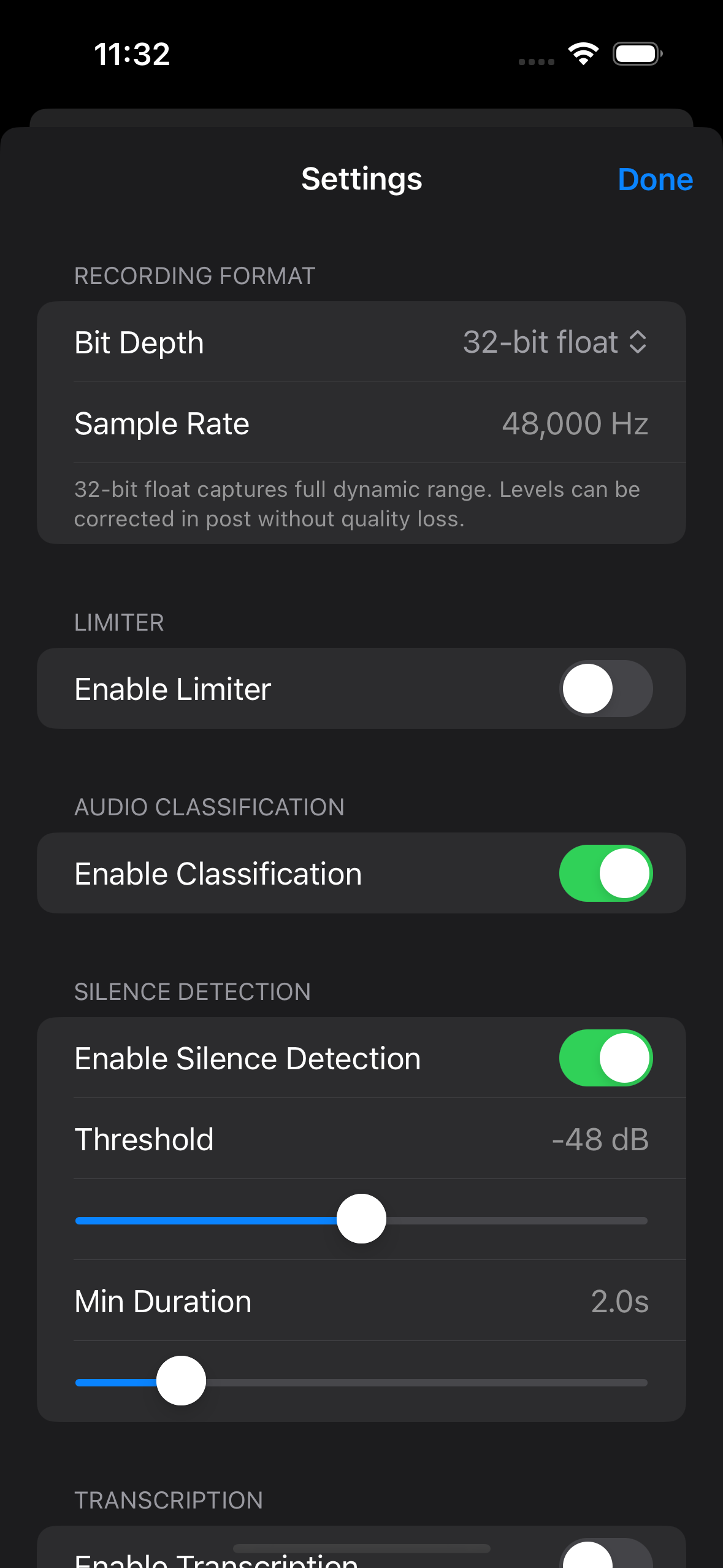
Spoolar captures audio in 32-bit float — a format that cannot clip, regardless of unexpected volume. Set levels once and record. The dynamic range exceeds any microphone or preamp you will connect to an iPhone.
At the point of recording, Spoolar embeds BWF/iXML metadata directly into the file. Scene, take, notes, location, and technical parameters travel with the audio from the moment it is captured. Recordings arrive in your library with production-ready metadata already in place.
UCS Classification
The Universal Category System is a standardised taxonomy for sound effects used across film, television, and game audio. Spoolar classifies recordings at capture time using a three-gate classifier: on-device Foundation Models for initial categorisation, confirmed against the UCS hierarchy, written as a flat iXML field with CatID-first filenames.
Recordings arrive in your library already tagged, searchable, and named according to the convention your post-production team expects.
Privacy
All audio processing and classification happen on-device. Recordings are stored locally. There is no cloud upload, no backend, and no analytics.
FAQ
- What is Spoolar?Spoolar is a professional field recording app for iOS. It captures audio in 32-bit float, embeds BWF/iXML metadata at the point of recording, and classifies sounds using the Universal Category System (UCS) standard used by the film and game audio industry.
- Why 32-bit float?32-bit float recording cannot clip. The dynamic range exceeds any microphone or preamp, which means you never lose a take to unexpected volume. Set levels once and forget them — the format handles the rest.
- What is UCS classification?The Universal Category System is a standardised taxonomy for sound effects used across film, television, and game audio. Spoolar classifies recordings at capture time so they arrive in your library already tagged, searchable, and ready for production.
The App
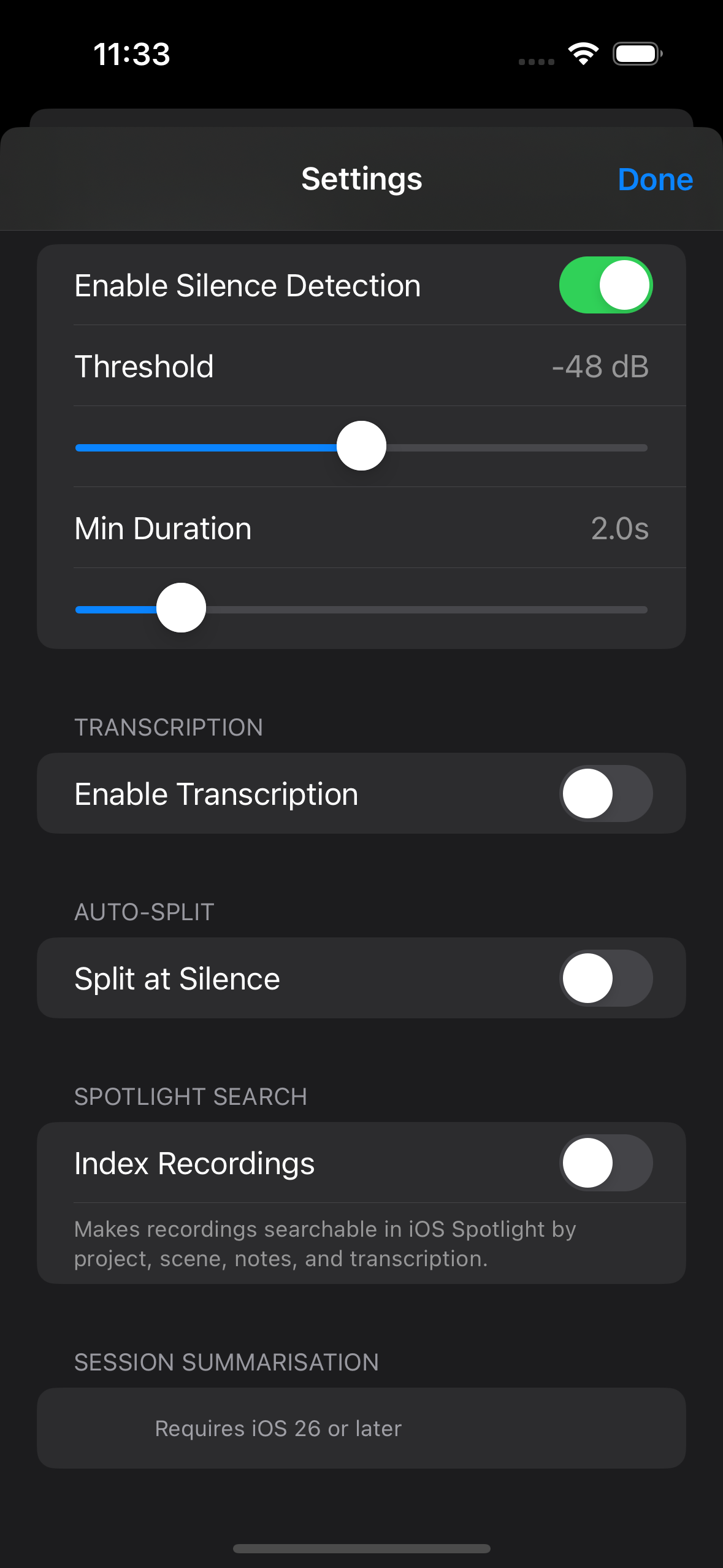
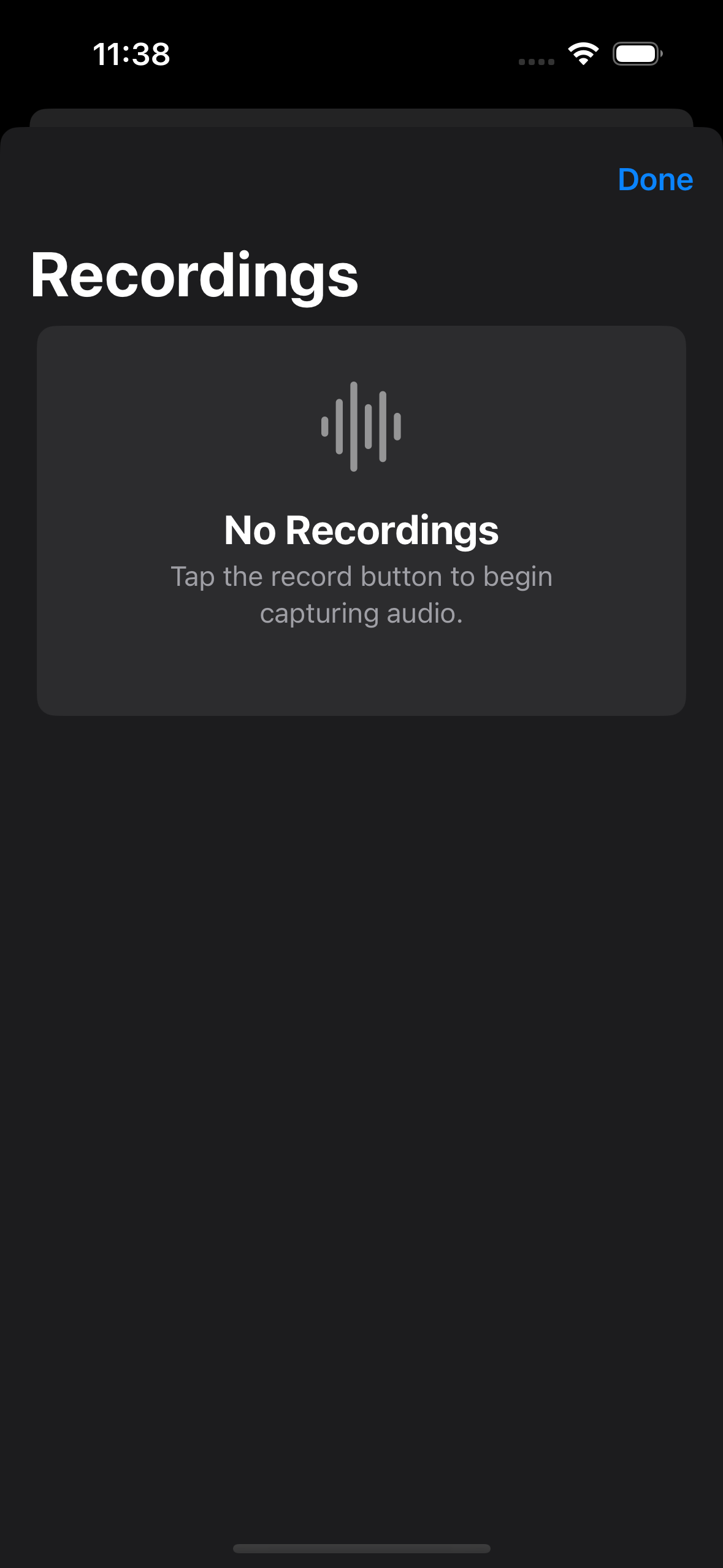
Screenshots from v0.10.3 running on iPhone 15 Pro simulator.
Status
Spoolar is in active alpha development for iOS. Core recording pipeline, metadata embedding, UCS classification, and in-app help are functional.